A country within the Kingdom
Aruba has governed its own internal affairs under Status Aparte since January 1, 1986. The Kingdom consists of Aruba, Curaçao, Sint Maarten and the Netherlands.
Aruba Travel Guide: Plan Your Perfect Aruba Vacation
Aruba Travel Guide: Plan Your Perfect Aruba Vacation
Aruba Travel Guide: Plan Your Perfect Aruba Vacation
Understand Aruba's history, people, government, economy, education, culture and natural environment, then use the local map to explore the island for yourself.
Aruba is a constituent country in the Kingdom of the Netherlands, a multilingual Caribbean society, a tourism-centered economy and a semi-arid island with a protected natural landscape. Its identity was shaped by Indigenous communities, Spanish and Dutch rule, gold, aloe, phosphate, oil, migration and self-government.
This reference combines Aruba's major history, government, population, economy, education, culture and travel facts in one readable guide. Figures that change are dated, and official sources are linked so readers can verify current information.
Open each chapter to follow the island from its earliest human presence to modern self-government and a global visitor economy.
Skip to the island map →Archaeological evidence shows that people lived on Aruba thousands of years before European arrival. These early communities adapted to a dry climate, seasonal rainfall and limited freshwater while fishing, gathering and using resources from both land and sea.
Artifacts and ancient rock markings preserved in Aruba's caves and archaeological sites provide evidence of these first island societies. They are part of a much longer regional story connecting Aruba with the coast of present-day Venezuela.
Around 1000 AD, Caquetío communities connected to the wider Arawak cultural world established permanent settlements. Fishing, farming, hunting, pottery and trade supported daily life.
Aruba's position close to the South American mainland encouraged movement of people, ideas and goods. Caquetío heritage remains central to understanding the island's precolonial identity.
European accounts traditionally associate Aruba with Alonso de Ojeda's 1499 expedition, and Spanish control followed in the early 1500s. Aruba, Bonaire and Curaçao were called the “Islas Inútiles,” or useless islands, because they did not provide the precious metals and plantation conditions Spain sought elsewhere.
Spanish authorities used Aruba mainly for livestock. Forced removals and colonial disruption deeply affected the Indigenous population, although people later returned and Indigenous ancestry remained part of Aruba's society.
The Dutch West India Company took Aruba from Spain in 1636. The island's dry environment limited plantation agriculture, so livestock, regional trade and strategic maritime interests played larger roles.
Dutch influence continues in Aruba's constitutional framework, law, education and official language. Aruba remained under Dutch authority except for a British occupation from 1806 to 1816 during the Napoleonic era.
Gold was discovered in 1824, beginning an era of prospecting, mining and ore processing. The Bushiribana and Balashi mill ruins remain visible reminders of nineteenth-century industry.
Phosphate extraction also contributed to Aruba's economy, while aloe became one of the island's best-known agricultural products. These activities diversified local work before the rise of oil and tourism.
Aruba changed rapidly after the Lago refinery began operations near San Nicolas in 1924 and the Arend refinery opened near Oranjestad in 1927. Aruba's location close to Venezuelan oil fields made the island an important refining and shipping center.
Workers arrived from across the Caribbean, Europe and the Americas. Oil supported roads, housing, utilities and new services while expanding Aruba's already diverse population.
During the Second World War, Aruba's refinery supplied fuel important to the Allied war effort. Its strategic value made the island a target, and German submarines attacked shipping and refinery-related infrastructure in the Caribbean in 1942.
The period brought military protection, international attention and lasting changes to the island's economy and society.
The Charter for the Kingdom of the Netherlands took effect in 1954. Aruba was then part of the Netherlands Antilles, while the Charter created a new constitutional relationship based on autonomous internal government and shared Kingdom responsibilities.
The arrangement set the stage for Aruba's long political movement toward a separate status within the Kingdom.
Gilberto “Betico” Croes became the leading figure in Aruba's campaign for a separate constitutional position. Aruba's Status Aparte took effect on January 1, 1986, making the island a constituent country within the Kingdom rather than part of the Netherlands Antilles.
Status Aparte gave Aruba control over its internal affairs through its own Parliament and Council of Ministers, while defense, foreign relations and Dutch nationality remained Kingdom responsibilities.
Aruba began developing tourism before the oil era ended, but the closure of the Lago refinery in 1985 accelerated the shift. Hotel development around Palm Beach and Eagle Beach, air access and international marketing helped tourism become the island's economic foundation.
Tourism created work in accommodation, restaurants, transport, retail, recreation and professional services, while also making economic diversification and responsible land use important national priorities.
Aruba's identity combines Indigenous, European, African, Caribbean, Asian and Latin American influences. Migration during the oil and tourism eras strengthened connections with the wider world.
Papiamento is the most widely spoken language at home. Dutch and Papiamento are official, while English and Spanish are widely used in business, education, tourism and everyday conversation.
Modern Aruba combines parliamentary self-government, Dutch Kingdom ties, a high level of multilingualism and an economy centered on international tourism. Oranjestad is the capital, while San Nicolas remains an important center of industry, art and culture.
The island now balances economic opportunity with pressures involving housing, labor, public finance, nature protection, water and energy security, and the long-term sustainability of tourism.
Aruba is not an independent sovereign state and it is not a Dutch municipality. It is one of four constituent countries that together form the Kingdom of the Netherlands.
Verify with the Government of Aruba ↗Mike Eman is Prime Minister, Alfonso Boekhoudt is Governor and Alfred Marlon Sneek is President of Parliament. The current Cabinet was formed by AVP and FUTURO. Offices and seat totals can change after elections or political developments.
Aruba has governed its own internal affairs under Status Aparte since January 1, 1986. The Kingdom consists of Aruba, Curaçao, Sint Maarten and the Netherlands.
The King of the Netherlands is head of state. Aruba's Governor represents the King and is appointed for a six-year term, with one possible reappointment.
The Government of Aruba consists constitutionally of the Governor and ministers. The Prime Minister leads the Council of Ministers, which is accountable to Parliament.
Aruba's voters elect the Staten van Aruba for four-year terms. As of August 2026, its seats are AVP 9, MEP 8, FUTURO 3 and PPA 1.
The Kingdom has overarching responsibility for defense, foreign relations and Dutch nationality law. Aruba sets policy in areas such as tourism, employment, healthcare and internal administration.
Aruba participates in the Joint Court of Justice, with eligible cassation cases going to the Supreme Court in The Hague. Parliament, the Advisory Council, General Chamber of Auditors and Ombudsman provide constitutional oversight.
Aruba's small population has unusually broad international roots. Migration connected to oil, tourism and regional family networks helped create the multilingual society visitors encounter today.
People from Aruba are called Arubans. There is no separate legal “Aruban citizenship”; nationality law is a Kingdom responsibility. Most residents hold Dutch nationality, but birthplace, residence, cultural identity and legal nationality are different concepts.
CBS Aruba reported that 60.3% of residents were Aruba-born in 2024 and 77.2% held Dutch nationality. Colombian, Venezuelan and Dominican communities are among the largest other nationality groups.
Papiamento and Dutch are official languages. Papiamento, official since 2003, is the most widely spoken home language. English and Spanish are common across tourism, media, commerce and everyday life.
The capital is Oranjestad. CBS organizes population statistics across eight regions: Noord/Tanki Leendert, Oranjestad West, Oranjestad East, Paradera, Santa Cruz, Savaneta, San Nicolas North and San Nicolas South.
Aruba moved from small-scale agriculture and trade to gold, aloe, phosphate and oil before becoming one of the Caribbean's most tourism-dependent economies.
Read the Central Bank report ↗The Central Bank of Aruba reported 4.2% real GDP growth year over year, 1.4% twelve-month inflation in March, an estimated 67.2% debt-to-GDP ratio and reserves covering 8.1 months of current-account payments.
Stay-over and cruise visitors support hotels, vacation rentals, restaurants, transportation, tours, retail, construction and professional services. Changes in international travel can therefore affect the wider economy quickly.
Finance, business services, communications, utilities, construction, wholesale and retail trade, government services and remaining industrial activity all contribute alongside tourism.
The official currency is the Aruban florin, written AWG or Afl. The Central Bank maintains a fixed exchange rate against the US dollar, with public rates centered around Afl. 1.79 per US$1.
Hotels, restaurants, tours and stores commonly accept US dollars and major cards. Change may be returned in florins, and individual exchange or card-conversion fees can vary.
Aruba imports much of what residents and businesses use, including food, consumer goods and fuel. Foreign-exchange reserves, air access and reliable utility systems are therefore economically important.
Long-term priorities include stronger public finances, workforce development, renewable energy, digital services, resilient infrastructure and tourism that protects the island's natural and social resources.
Aruba's education system is modeled largely on the Dutch system but operates in a society where many children use Papiamento at home and regularly encounter Dutch, English and Spanish.
Early childhood and primary schools build literacy, mathematics and general knowledge. Papiamento literacy entered Grade 1 across primary schools in the 2024–25 school year as language policy continues to develop.
After primary school, students may enter general or pre-university pathways such as MAVO, HAVO and VWO, or vocational routes designed to prepare them for work and further study.
EPB and EPI provide vocational and professional programs connected to sectors such as hospitality, technology, health, administration and skilled trades.
The University of Aruba offers higher-education programs on the island. Many students also continue their studies in the Netherlands, the United States or elsewhere in the region.
Dutch is still the teaching language in many schools, while Papiamento and multilingual approaches are receiving greater attention. Some EPI and University of Aruba programs are offered in English.
The Directorate of Education oversees policy and information, including the National Education Plan 2030. Compulsory-education rules are supported by Aruba's Bureau Leerplicht.
Aruba has no natural rivers, lakes or dependable groundwater supply. WEB Aruba has produced drinking water from desalinated seawater since 1932. The island has public and private healthcare providers, road-based transport, an international airport, cruise and cargo ports, and modern mobile and internet networks. Public buses link major populated areas, while cars and taxis remain important for island-wide travel.
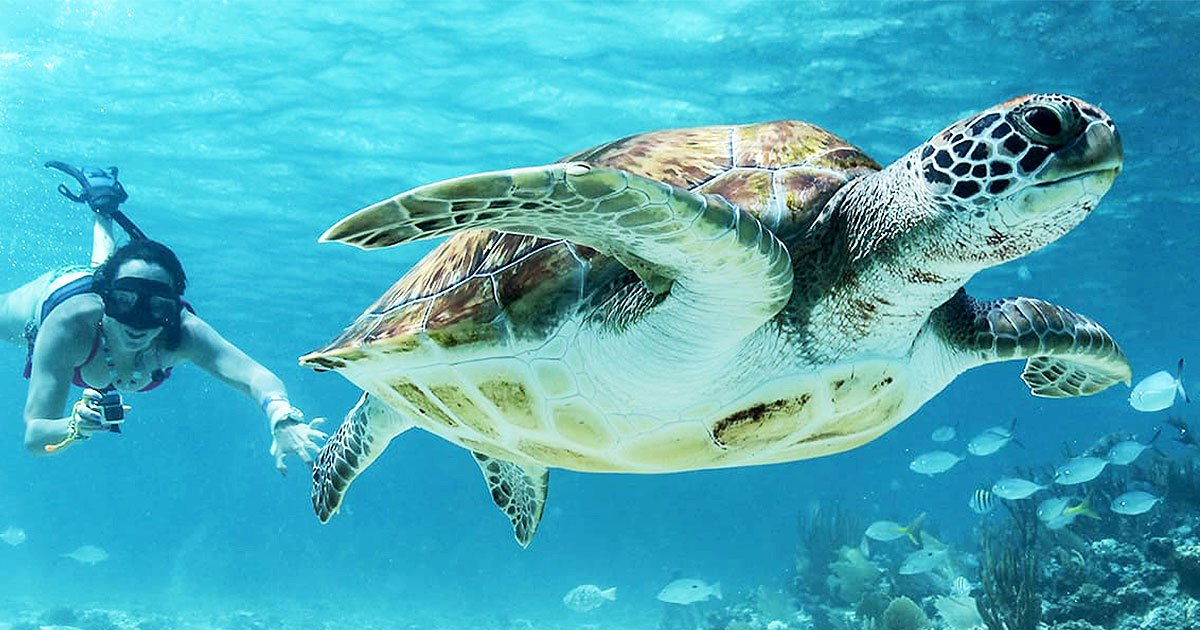
Explore historic landmarks, local neighborhoods, clear-water snorkeling spots, rugged coastlines and the people and places that give Aruba its character.
Aruba lies in the southern Caribbean about 15 miles north of Venezuela. Its sheltered southwest coast, rugged windward north coast and dry interior create very different landscapes within a small area.
Average temperatures stay near 85°F, or 29°C, with cooling trade winds and relatively low rainfall. Aruba lies outside the main hurricane belt, although no Caribbean destination is completely free from tropical-weather effects.
Aruba's interior contains cactus scrub, divi-divi and fofoti trees, rock formations and dry hills. Limestone terraces and caves meet older volcanic landscapes across the island.
Arikok National Park protects roughly 34 square kilometers of Aruba, including caves, hills, cultural sites, coastline and habitat for native plants and animals.
Aruba Conservation Foundation manages protected terrestrial and marine areas, including Arikok, Spanish Lagoon and four marine protected areas. Together, managed natural terrain covers about 24.3% of the island.
The foundation records 34 endemic species and 282 bird species. Recognizable wildlife includes the Aruban burrowing owl, rattlesnake, whiptail lizard, parakeet and nesting sea turtles.
ATVs, UTVs and motorbikes are prohibited inside protected nature areas. Visitors should remain on approved routes, avoid wildlife disturbance, leave rocks and shells in place and follow current park instructions.
Aruban culture developed through centuries of exchange among Indigenous, European, African, Caribbean, Asian and Latin American peoples. Language, food, music and celebrations carry that history forward.
Aruba adopted its flag and national anthem, “Aruba Dushi Tera,” on March 18, 1976. March 18 is now National Flag and Anthem Day and commemorates the island's path toward Status Aparte.
Dia di Betico on January 25 honors Betico Croes. Carnival Monday, King's Day and March 18 are among the island's important public observances. In 2026 Aruba marks 40 years of Status Aparte and 50 years of its flag and anthem.
Aruba Carnival brings road marches, parades, steel bands, tumba and elaborate costumes to communities across the island. The season culminates before Lent and is one of the year's largest cultural celebrations.
Aruban cooking reflects local ingredients and global connections. Familiar dishes include pastechi, pan bati, keshi yena, stews, fresh seafood and Dutch- and Latin-influenced sweets and snacks.
Traditional cunucu houses were adapted to the climate and available materials. Dutch Caribbean buildings characterize parts of Oranjestad, while San Nicolas is known for public murals and a growing arts identity.
Baseball has deep local popularity, while constant trade winds support sailing, windsurfing and kitesurfing. Football, beach sports, diving and fishing are also part of island life.
These essentials explain how the island functions and what travelers should confirm before departure.
Aruba's administrative, commercial and cruise center.
Includes US border preclearance for eligible US-bound flights.
UTC−4 throughout the year, with no daylight saving time.
US dollars and major cards are widely accepted.
Produced from desalinated seawater and distributed island-wide.
North American-style plugs are commonly used.
For police, ambulance or fire emergencies.
Complete the official form within seven days before arrival.
Collected through the official ED-card process, subject to listed exemptions.
Visa rules depend on nationality; border authorities make the final decision.
The airport recommends arriving three hours early for US-bound flights.
Use current signs, avoid off-road damage and confirm rental rules.
Population figures on this page use CBS data through the end of 2025. Economic indicators use the Central Bank's first-quarter 2025 report. Government leadership and Parliament composition were checked in August 2026. Entry rules, fees, public offices and economic figures can change, so use the official links below before making a legal, financial or travel decision.
Aruba sits outside the main hurricane belt and is known for sunshine, steady trade winds and warm temperatures.
Choose wide white sand, lively resort beaches, shallow lagoons or quieter snorkeling coves.
Languages, food, music and traditions reflect generations of connection across the Caribbean and South America.
Sailing, snorkeling, UTV routes, Jeep safaris, caves and historic sites make it easy to explore.
Protect the reservations that shape the trip, then leave enough open time to enjoy Aruba naturally. The goal is not to reserve every hour. It is to secure the stay, transportation and must-do experiences that would be hard to replace later.
If missing it would change the entire trip, reserve it before arrival. If it can happen on several days or has many alternatives, it can usually stay flexible.
Choose the area, room type and budget that will define the trip.
Reserve the vehicle type you need when independent exploration matters.
Protect the experiences that matter most or must happen on a specific day.
Know how your group and luggage will reach the accommodation before landing.
Reserve celebration meals or specific venues you would be disappointed to miss.
Make decisions in an order that prevents one reservation from creating problems for another.
Confirm travel dates, choose the Aruba area that fits your trip and reserve the accommodation.
Flights → Stay → Trip baseDecide whether you need a rental car, secure essential tours and arrange airport transportation.
Car → Tours → TransferReserve important meals, review policies, save confirmations and protect some flexible time.
Dining → Review → RelaxChoose the beach based on wind, waves, energy and the kind of day you want.
Leave openings for local spots and recommendations discovered during the trip.
General shopping and souvenirs rarely need an advance reservation.
Keep room to rest, repeat a favorite or adjust when plans change.
Check the calendar date, local start time and expected duration.
Confirm the meeting point, pickup area or property address.
Review taxes, fees, deposits and what the payment includes.
Check age, mobility, license, clothing or equipment requirements.
Read the provider's current cancellation and change terms.
Save the voucher and contact details where they work offline.
Find the experiences that fit your trip and book at no extra cost through Aruba Vibes Daily.
A great Aruba trip is not about racing through every attraction. Choose the experiences that matter most, keep some beach time flexible, and build a trip that still feels like a vacation.
Start with five priorities: one beach, one ocean experience, one island adventure, one local moment and one sunset. Then leave room to slow down.
Use these as pacing guides, not rigid schedules.
Choose one major paid experience and keep the rest simple.
Enough variety without turning the vacation into a race.
The extra value comes from space, not from filling every hour.
Compare Aruba's best experiences in one place and book at no extra cost.
Open the live island map only when you need it, or choose a place below for direct turn-by-turn directions from your current location.
The map makes no initial request, so it does not slow the first page view. Load it when you want to zoom, move around the island or inspect an area.
Zero map requests have been made.Wide white sand, turquoise water and Aruba's famous fofoti trees.
Directions ↗High-rise resorts, restaurants, nightlife and water activities.
Directions ↗A shallow turquoise lagoon near San Nicolas that is popular with families.
Directions ↗Clear water, snorkeling and a relaxed local atmosphere near the lighthouse.
Directions ↗Casual waterfront seafood in Savaneta with a distinctly local setting.
Directions ↗Aruban dining in a historic cunucu-house setting.
Directions ↗Beachfront dining in Savaneta with tables close to the water.
Directions ↗Casual Caribbean-inspired dining beside the water near Oranjestad.
Directions ↗A northern-island landmark with wide coastal and sunset views.
Directions ↗A peaceful chapel surrounded by Aruba's cactus landscape.
Directions ↗Historic stone ruins along Aruba's rugged north coast.
Directions ↗The main starting point for exploring Aruba's national park.
Directions ↗Aruba's international airport and primary arrival point.
Directions ↗The arrival area for cruise visitors entering downtown Oranjestad.
Directions ↗Shopping, historic buildings, restaurants and the waterfront.
Directions ↗Murals, local culture and a gateway to Baby Beach and Rodgers Beach.
Directions ↗Directions open in Google Maps only after you click. Your map app may request location permission to use your current position as the starting point. Always follow official signs and current road conditions.
Aruba Vibes Daily summarized information from public institutions and official island organizations. Open any source to verify a figure or find the newest update.
Clear answers about Aruba's status, leaders, people, economy, history and visitor requirements.
Aruba is a constituent country within the Kingdom of the Netherlands. It governs its own internal affairs, while Kingdom matters include defense, foreign relations and Dutch nationality law.
Aruba has a parliamentary democracy. The Governor represents the King, the Prime Minister leads the Council of Ministers and the 21-member Parliament is elected by Aruba's voters.
As of August 2026, Mike Eman is Prime Minister, Alfonso Boekhoudt is Governor and Alfred Marlon Sneek is President of Parliament.
People from Aruba are called Arubans. Aruba has no separate legal citizenship; nationality law is a Kingdom matter and most residents hold Dutch nationality. Cultural identity, birthplace, residence and legal nationality are not the same thing.
The Central Bureau of Statistics recorded 110,625 residents at the end of 2025.
Dutch and Papiamento are Aruba's official languages. Papiamento is the most widely spoken home language, and English and Spanish are also widely used.
The Aruban florin, abbreviated AWG or Afl., is the official currency. It has a fixed exchange rate against the US dollar, and US dollars are widely accepted.
Tourism is the cornerstone of Aruba's economy and supports accommodation, food service, transport, retail and many local services. Construction, finance, business services, utilities and government services also contribute.
Aruba's education system is modeled largely on the Dutch system and includes primary, secondary, vocational, higher and adult education. Dutch remains the language of instruction in many schools, while Papiamento and multilingual education have growing roles.
Archaeological evidence shows human presence for thousands of years. Caquetío communities connected to northern South America established permanent settlements around 1000 AD.
Status Aparte is Aruba's separate constitutional status within the Kingdom of the Netherlands, which took effect on January 1, 1986.
Aruba has a warm semi-arid tropical climate, lies outside the main hurricane belt and uses Atlantic Standard Time, UTC minus 4, without daylight saving time.
Yes. Aruba produces drinking water from desalinated seawater, and tap water is safe to drink.
Every visitor, including infants and children, must complete Aruba's online Embarkation and Disembarkation card before arrival. Passport and visa rules depend on the traveler's nationality.
Use the Aruba Vibes Daily island directory on this page to open directions to selected beaches, restaurants, landmarks, the airport and other useful locations.
Once your travel dates are confirmed, reserve the accommodation that fits your preferred area and budget. Then secure essential transportation and the tours that matter most to your trip.
Reserve any must-do experience before arrival, especially limited-capacity boat trips, sunset departures, private experiences and tours that must fit a specific day. Leave flexible time for spontaneous plans.
Not always. Travelers staying near Palm Beach or Eagle Beach may combine walking, taxis, transfers and tours. Renting a car for only part of the trip can work when independent exploration is limited to a few days.
An airport transfer is optional, but prearranging one can make arrival easier for families, larger groups, travelers with extra luggage or anyone who prefers a confirmed pickup.
Confirm the date, meeting point, inclusions, age or mobility requirements, cancellation terms, total price and checkout provider before completing payment. Save the confirmation where it is easy to access.
Tell Aruba Vibes Daily your dates, group size and what kind of day you want.
Local recommendations, new experiences and practical island tips, sent occasionally.